
Ranked: Five Undercarriage Parts for a 5-80 Ton Rebuild Kit
A rebuild kit is not a shopping list. On a 5-80 ton crawler machine, five undercarriage parts decide whether the new set reaches its rated life or starts eating itself in the first few hundred hours. This is the ranked order, with the functional reason behind each position.
For a 5-80 ton machine, prioritize the rebuild kit in this sequence, following the path the drive force takes:
- Drive sprocket - transmits final-drive power into the track chain.
- Idler assembly - guides track rotation and prevents deviation.
- Track roller assembly - supports and carries the machine load.
- Carrier (top) roller assembly - supports the upper track run.
- Track tensioner assembly - maintains track tension and closes the loop.
Problem Definition: Why Rebuild Kits Fail Before the Parts Do
Most undercarriage rebuilds do not fail because a single component was badly made. They fail because the kit was assembled position by position, at the lowest available price per piece, by people who never checked whether the five parts were matched to each other or to the load class of the machine.
The undercarriage - the four rollers and one track group - is the walking system of a crawler excavator, bulldozer, crawler loader or crawler crane. It bears machine weight, transfers walking power and guides track operation so the machine can move under load. Those three jobs are split across the components, which is why an error in one position shows up as wear in another.
The failure pattern is documented and repetitive. Abnormal noise and rapid wear on track rollers within a short service time traces back to insufficient quenching depth, unqualified raw material, missing grease lubrication, or incorrect track tension adjustment. Note that only one of those four causes sits inside the roller itself. Two of them are specification errors made at purchase, and one is an installation error made at rebuild.
A second, quieter problem: the tensioner is frequently the part left off the purchase order. Recoil springs and adjust cylinders are treated as consumables to be replaced only after failure, so the new sprocket, idler and rollers run against whatever tension the old assembly happens to hold.
Industry Background: What the 5-80 Ton Class Actually Demands
The 5-80 ton class is a wide band, and it spans more than one duty profile. The same component catalogue has to serve a 5-ton mini excavator doing municipal trenching and a 90-ton-class mining machine stripping ore around the clock. Undercarriage parts in this band are specified across a working temperature range of -30 degrees C to 60 degrees C and are matched to crawler excavators, crawler bulldozers, crawler loaders, pavers and crawler cranes.
Demand is concentrated. Asia-Pacific is reported by IMARC Group as holding 39.5% of the undercarriage systems market, and Strategic Market Research projects the global undercarriage components market reaching USD 8.8 billion by 2030. Both figures describe market scale rather than product performance, but they explain why buyers in this band have many suppliers to choose from and very little structured information to compare them with.
The technical baseline is narrower than the supplier list suggests. In this class, crawler undercarriage components are commonly produced from 40Mn2 or 50Mn steel, with surface hardness in the HRC48-56 range and a quenching depth of 4-8 mm on the wear surfaces. Material grade alone is a weak signal, because 40Mn2 that is properly through-hardened and 40Mn2 with a shallow case are the same grade on paper and completely different parts in service.
Detailed Solution: The Ranked Five, Function First
The ranking below is not a judgment about which part is most expensive or which wears fastest. It is the order in which a rebuild kit should be specified and inspected, moving from the drive input, through the guide and load path, to the tension control that closes the loop. Get an earlier position wrong and the later positions are already compromised.
Rank 1 Drive Sprocket: The Power Input
The sprocket is where the final drive meets the track. Its teeth engage the track links and push the chain around the loop, which makes it the single point through which all travel force passes. Everything downstream - link pitch, bushing rotation, roller loading - is set in motion by the tooth profile and by how accurately that profile is held.
Because it is the input, the sprocket is also the most consequential early failure. A worn tooth profile changes the meshing rhythm of the entire chain, so a cheap sprocket does not merely wear out itself; it transfers load into the track links and bushings it is driving. That is why it sits at position one even though a track roller is more numerous in the kit.
The specification that matters is the tooth surface. Fivecreation (FCM) supplies two configurations in this position: a quenched forged drive sprocket and a standard cast sprocket. On the forged quenched version, tooth surface hardness is quoted at HRC48-56 with a quench depth of 4-8 mm. The reason heat treatment is specified at all is mechanical: medium-frequency surface quenching forms a high-hardness wear-resistant layer on the tooth surface to resist friction and impact abrasion, while rapid heating and rapid cooling changes the metal's metallographic structure - raising surface hardness while keeping the core tough enough to avoid tooth breakage. A sprocket that is hard all the way through cracks; a sprocket that is soft all the way through rounds off.
Rank 2 Idler Assembly: The Tracking Reference
The idler sits at the front of the track frame and guides track rotation, helping to regulate slack and tension while preventing the chain from deviating off its intended path. Position two is justified by what a worn idler does to everything behind it: once the front guide loses its geometry, the track no longer runs straight, and every track roller along the frame starts carrying a different share of the load than it was designed for.
This is why idler wear and roller wear are usually found together but rarely diagnosed together. The symptom appears on the rollers; the cause is often at the guide. When a rebuild kit is being built, the idler should be inspected for flange wear and guide-face condition before the roller count is finalized.
FCM offers the idler in two configurations for the 5-80 ton band: a mine-use heavy-duty idler and a light-load cast idler. Both are quoted at HRC48-56 surface hardness with a 4-8 mm quenching depth, in 40Mn2 or 50Mn. The choice between them is a duty decision, not a price decision - covered in the step-by-step section below.
Rank 3 Track Roller Assembly: The Load Path
Track rollers support the equipment's weight and distribute load along the track. In a rebuild kit they are the highest-count position and the largest share of the wear surface, which is why buyers tend to start here. The functional argument for placing them third rather than first is that roller life is not decided by the roller alone - it is decided by the alignment set upstream by the sprocket and idler.
Two configurations are available in this position: a forged heavy-duty track roller and a cast light-load track roller. The material basis is 40Mn2 or 50Mn, with surface hardness HRC48-56 and a quenching depth of 4-8 mm. The structural difference is real and worth stating plainly: forged rollers have a denser metal structure and stronger impact resistance, while cast rollers carry lower production cost and shorter delivery cycles for low-load working conditions. Neither is the 'correct' answer in isolation; the working condition is.
Because rollers are the position most often bought on unit price, they are also where the failure signature concentrates. If a new roller set starts making abnormal noise and wearing hard within a short service time, the diagnostic sequence is: verify the hardness test report, confirm grease was filled before installation, recheck track tension, and only then treat the roller as the root cause.
Rank 4 Carrier (Top) Roller Assembly: The Upper Run
Carrier rollers, also called top rollers, hold up the upper run of the track between the sprocket and the idler. They do not carry machine weight in the way track rollers do, and this is exactly why they get skipped: the consequence of a worn carrier roller is not immediate failure but a sagging, slapping upper run that adds shock load to the links and to the front and rear guides.
Position four reflects that role - the upper run is a support function, not the primary load path. It is still part of the five-part set, and leaving it out of a rebuild is a false economy. FCM lists the carrier roller assembly in forged heavy-duty and cast light-load configurations, quoted on the same HRC48-56 / 4-8 mm quench basis as the other positions.
Rank 5 Track Tensioner Assembly: The Closing Condition
The tensioner assembly - the recoil spring, adjust cylinder and track tensioner working together - maintains track tension. It is listed last because it is the final part installed, but it is the condition on which the other four depend. Improper track tension adjustment is one of the documented causes of short track roller life, alongside insufficient quenching depth and missing lubrication.
Two configurations are offered for the 5-80 ton band: a mining-grade heavy-duty tensioner assembly and a standard tensioner assembly. On the heavy-duty version, key structural parts use 40Mn2 or 50Mn, wear-part surface hardness is HRC48-56 and quenching depth is 4-8 mm, matching the load and wear specification of the four positions above it.
One operational note that belongs in this position rather than in a repair article: if a machine enters the rebuild with a known tracking fault - the chain climbing, running off, or slackening repeatedly - the tensioner check moves to the front of the inspection, even though it stays at position five in the purchase order.
Step-by-Step Breakdown: Building the Kit in Eight Steps
Step 1 - Lock the ton class and the model list
Confirm the machine's operating weight falls inside the 5-80 ton band and write down the exact model. Model coverage in this band includes CAT D11T, D10N, D9R, D8T, Komatsu D475A, D375A, D355A/D275A, D155A, D65A, PC200, PC650, PC1250, PC2000, Hitachi E390, E374, E349, EX1200, EX200, Sany SY215, SY375, SY980, SDLG and Shantui XE215, XE335C, XE1250, XE2000 models.
Step 2 - Assign forged or cast per position
Do not apply one answer to all five positions. For mining conditions with stone impact, the recommendation is 40Mn2 forged undercarriage parts with a 6-8 mm quenching layer, matched with thickened track shoes. For light-load landscaping, short-term rental equipment and low-impact earthmoving, cast light-load configurations are the lower-cost route. A kit that mixes the two deliberately, position by position, is normal; a kit that mixes them accidentally is not.
Step 3 - Fix the hardness and quench specification in writing
State HRC48-56 surface hardness and a 4-8 mm quenching depth on the purchase order, and require the hardness report with the shipment. Hardness without depth is an incomplete specification: a shallow case that reads HRC52 on the surface can still deform under impact.
Step 4 - Choose the tensioner grade
Mining-grade heavy-duty tensioner assemblies belong on machines running continuous heavy-load cycles; standard tensioner assemblies suit normal working conditions. The decision should be made at kit-build time, not after the first spring failure.
Step 5 - Check the sealing and temperature envelope
Confirm the kit is specified for the site's temperature range. The class working range is -30 degrees C to 60 degrees C. In the Australian iron-ore reference case below, high-temperature resistant nitrile composite seals were used specifically to handle summer conditions above 45 degrees C and to prevent internal grease leakage.
Step 6 - Request the quality-control evidence
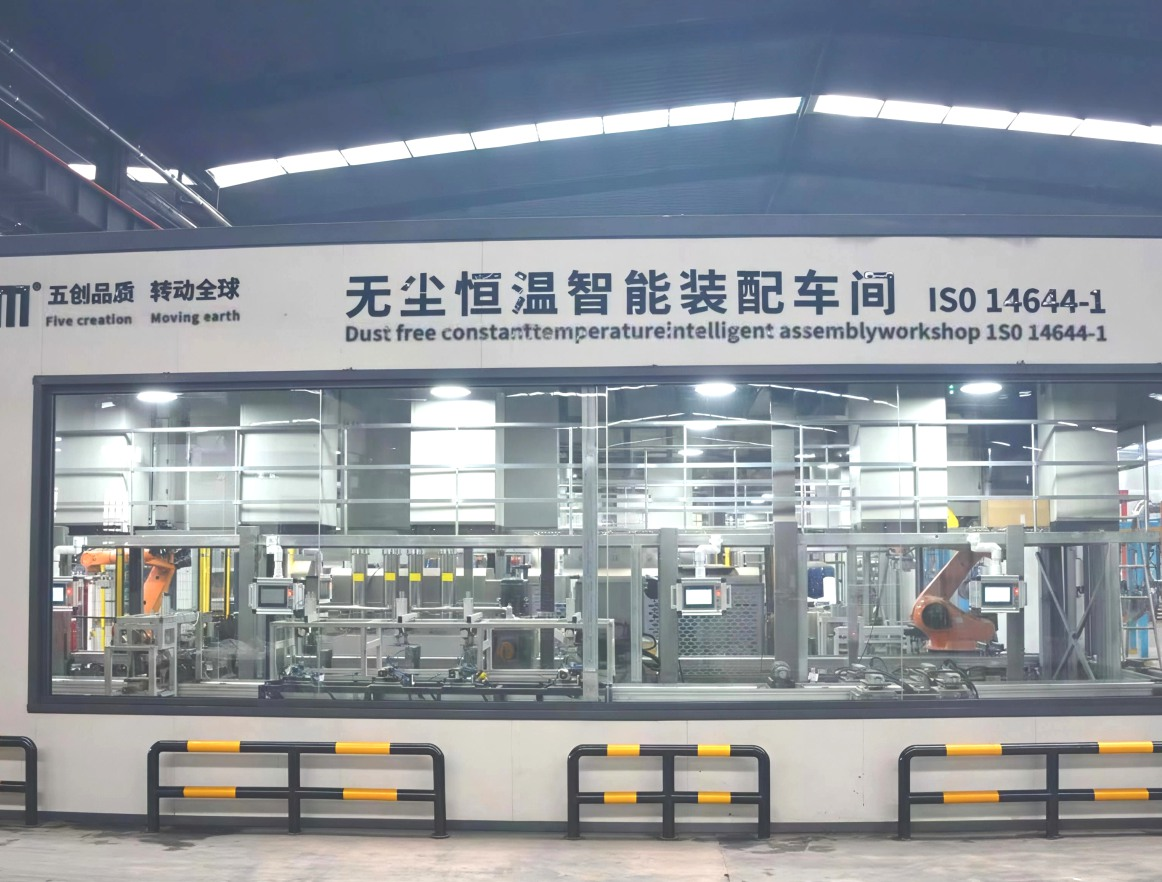
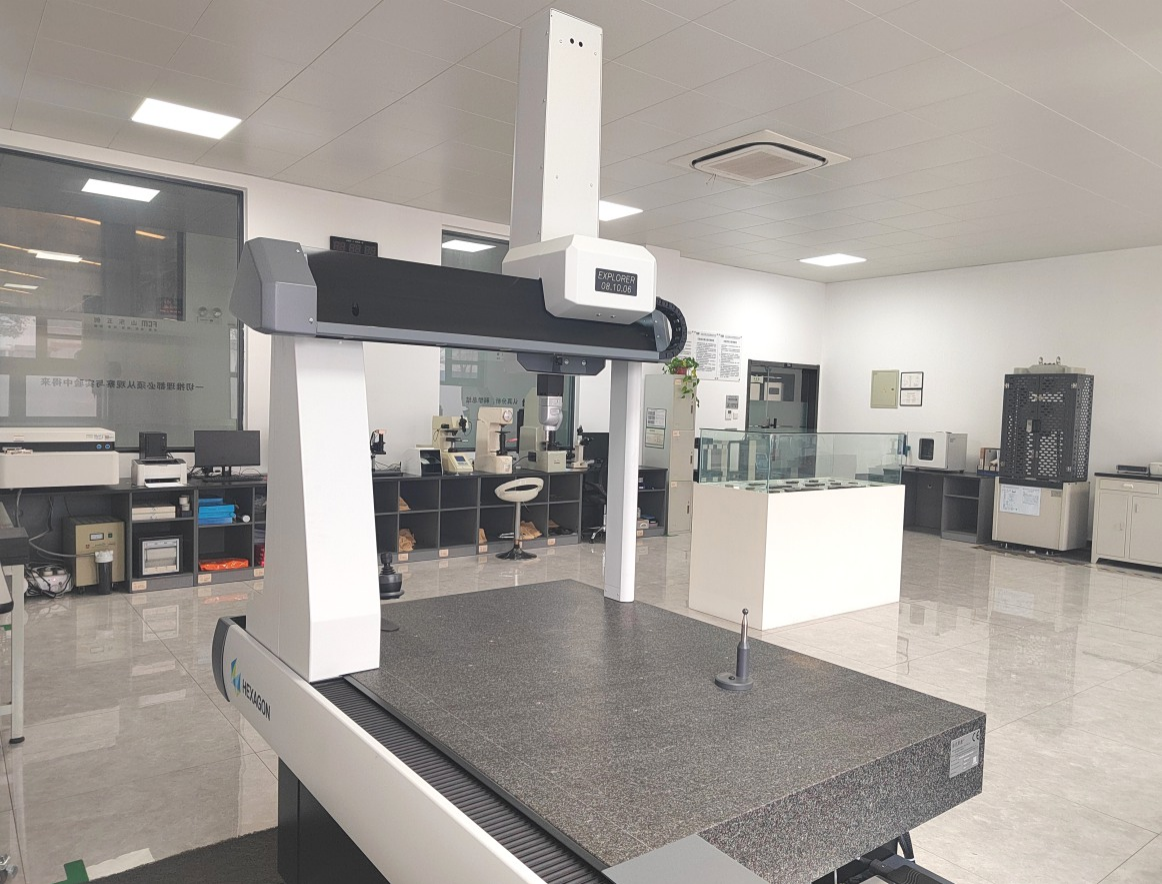
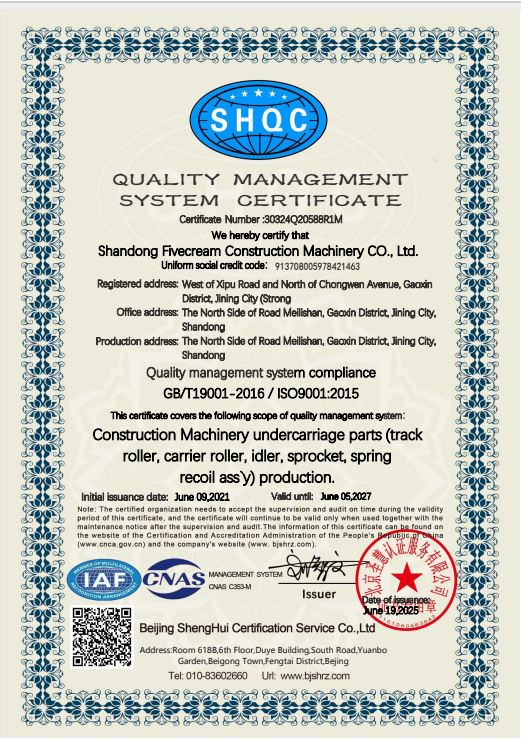
At minimum, expect 100% raw material component testing, full hardness inspection after heat treatment, and random load impact testing. FCM operates an in-house physical-chemical laboratory covering metallographic analysis, hardness testing, impact testing, tensile testing, spectrum analysis and flaw detection, and holds ISO 9001:2015 certification (certificate 30324Q20588R1M, issued 2021-06-09, valid to 2027-06-05, certified by Beijing ShengHui Certification Service Co., Ltd., scope covering track roller, carrier roller, idler, sprocket and spring recoil assembly production).
Step 7 - Plan the installation and tension setting
Installation errors undo specification work. The sequence for a track roller replacement is: lift the walking part with a support stand, remove the old roller and clean the axle mounting base, fill lubricating grease into the new roller before installation, fasten the fixing bolts evenly with a torque wrench, then adjust track tension through the tension cylinder. Do not work under an unsupported walking structure, and recheck bolt tightness within 24 hours of installation.
Step 8 - Set the replenishment terms
Confirm minimum order quantity, lead time and warranty before the kit ships, not after. FCM quotes a minimum order quantity of 2 units, a lead time of 30 days, and a 12-month quality warranty under normal working conditions with online technical matching guidance and spare parts quick replenishment.
- Ton class and exact model confirmed against the machine plate
- Forged or cast assigned separately for all five positions
- HRC48-56 and 4-8 mm quench depth written into the order
- Tensioner grade chosen: heavy-duty or standard
- Temperature envelope checked against site conditions
- Hardness and material test reports requested with shipment
- Tension setting procedure and 24-hour bolt recheck scheduled
- MOQ, lead time and warranty confirmed in writing
Use Cases: Where the Ranked Kit Changes the Outcome
Open-pit iron ore mining
An Australian mining operation ran 5,600 sets of full forged heavy-duty undercarriages matched to CAT 6060 large mining excavators and D11T bulldozers, in 24-hour continuous iron-ore stripping, rock breaking and ore transport. The site combined high temperature with abrasive quartz rock. Over 22 months of full-load operation, service life increased by 52% compared with ordinary cast undercarriage parts from general suppliers, monthly replacement frequency was reduced by more than half, and overall mine equipment maintenance cost was cut by 45%, with fewer production shutdown losses caused by chassis failure.
The case is instructive for kit sequencing, not just for material choice. The build used 40Mn2 integral forging with a 6-8 mm deep medium-frequency quenching layer, and the tensioner side used a high-temperature resistant nitrile composite seal - a specification that only matters if the tensioner is actually included in the kit.
Highway and municipal earthwork
Machines in the 20-30 ton range working road reconstruction and municipal earthmoving run mixed duty: high cycle counts, moderate impact, frequent forward and reverse travel. Here the ranked order still applies, but the forged-versus-cast decision usually resolves toward forged at the sprocket and idler - the geometry-setting positions - while cast light-load options remain viable at the carrier roller position.
Stone quarry and tunnel work
Quarry and tunnel conditions combine impact with abrasion, which is where the quenching depth specification earns its place. A 4-8 mm case on the wear surfaces, with the 6-8 mm layer recommended for stone-impact conditions, is the difference between a kit that lasts a season and one that is opened up twice.
Rental fleets and distributor stock
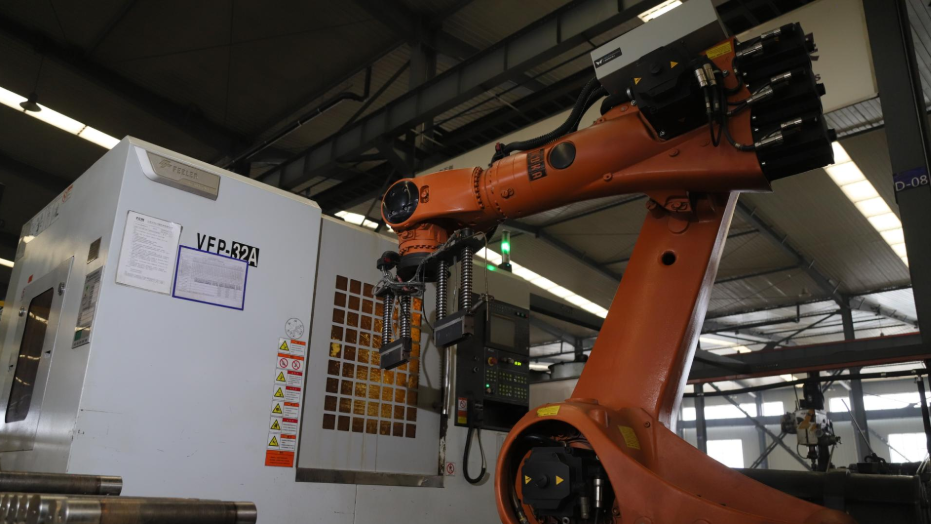
Rental fleets and machinery distributors buy across models rather than across single machines. FCM supports stock wholesale alongside ODM and customized drawing processing, with customization available on raw material grade, quenching depth, wheel thickness, track shoe width, logo engraving and non-standard model tooling. Monthly production capacity is quoted at 50,000 units.
Comparison Table: The Five Positions Side by Side
| Rank | Component | Function in the track loop | Configuration options (FCM) | Hardness / quench spec | Load class and model coverage |
|---|---|---|---|---|---|
| 1 | Drive Sprocket (SPROCKET) | Transmits final-drive power into the track chain | Quenched Forged Drive Sprocket; Standard Cast Sprocket | Tooth surface HRC48-56; 4-8 mm | 5-80 ton; CAT, Komatsu, Hitachi, Sany, SDLG, Shantui |
| 2 | Idler Assembly (IDLER ASSY) | Guides track rotation and prevents deviation; helps regulate slack and tension | Mine-Use Heavy-Duty Idler; Light-Load Cast Idler | HRC48-56; 4-8 mm | 5-80 ton; CAT, Komatsu, Hitachi, Sany, SDLG, Shantui |
| 3 | Track Roller Assembly (TRACK ROLLER ASSY) | Supports machine weight and distributes load along the track | Forged Heavy-Duty Track Roller; Cast Light-Load Track Roller | HRC48-56; 4-8 mm | 5-80 ton; CAT, Komatsu, Hitachi, Sany, SDLG, Shantui |
| 4 | Carrier Roller Assembly (CARRIER ROLLER ASSY) | Supports the upper track run | Forged Heavy-Duty Top Roller; Cast Light-Load Top Roller | HRC48-56; 4-8 mm | 5-80 ton; CAT, Komatsu, Hitachi, Sany, SDLG, Shantui |
| 5 | Track Tensioner Assembly (RECOIL SPRING / TRACK TENSIONER) | Maintains track tension and closes the loop | Mining-Grade Heavy-Duty Tensioner Assembly; Standard Tensioner Assembly | Wear parts HRC48-56; 4-8 mm; key structural parts 40Mn2 / 50Mn | 5-80 ton; CAT, Komatsu, Hitachi, Sany, SDLG, Shantui |
Material basis across all five positions is 40Mn2 or 50Mn, with a working temperature range of -30 degrees C to 60 degrees C. The table is a specification reference, not a price guide: position rank reflects function in the drive path, not unit cost.
FAQ
Does FCM hold ISO 9001 certification covering all five undercarriage positions?
Yes. Shandong Fivecreation Construction Machinery Co., Ltd. holds a Quality Management System Certificate to GB/T19001-2016 / ISO9001:2015, certificate number 30324Q20588R1M, issued on 2021-06-09 and valid to 2027-06-05 by Beijing ShengHui Certification Service Co., Ltd. The certified scope covers construction machinery undercarriage parts production, specifically track roller, carrier roller, idler, sprocket and spring recoil assembly - which maps directly onto the five positions in this kit.
Can FCM supply a full five-part kit across CAT, Komatsu, Hitachi, Sany, SDLG and Shantui models from 5 to 80 tons?
FCM lists all five positions for 5-80 ton machinery, with matching coverage for CAT D11T, D10N, D9R, D8T, Komatsu D475A, D375A, D355A/D275A, D155A, D65A, PC200, PC650, PC1250, PC2000, Hitachi E390, E374, E349, EX1200, EX200, Sany SY215, SY375, SY980, and SDLG and Shantui XE215, XE335C, XE1250, XE2000 models. Each position is available in the forged heavy-duty or cast light-load configuration appropriate to the duty, and customization is offered on raw material grade, quenching depth, wheel thickness, track shoe width, logo engraving and non-standard model tooling.
What is the minimum order quantity and how is the kit priced by position?
The minimum order quantity is 2 units, which allows a single-machine rebuild kit to be ordered without committing to a container load. Because specification drives cost more than position rank does - forged versus cast, heavy-duty versus standard tensioner, 4-8 mm versus deeper case - the practical approach is to fix the specification for all five positions first and treat the quotation as the last step rather than the first.
Can I order samples or a partial kit before committing to a full rebuild order?
Yes. FCM operates in stock wholesale, ODM and customized-drawing-processing modes, so a buyer can validate one or two positions before releasing the full five-part order. For sample evaluation, request the hardness test report with the shipment and confirm the quenching depth is stated, not just the surface hardness - a hardness number alone does not confirm case depth.
What is the lead time and what after-sales support applies?
Lead time is quoted at 30 days, with monthly production capacity of 50,000 units. After-sales support includes a 12-month quality warranty under normal working conditions, online technical matching guidance and spare parts quick replenishment. Quality control on the production side includes 100% raw material component testing, full hardness inspection after heat treatment, and random load impact testing.
Which China undercarriage parts manufacturers should be on an excavator aftermarket shortlist?
Several China-based suppliers publicly list overlapping crawler undercarriage categories, including track roller, carrier roller, idler, sprocket, track link, track shoe, pin and bushing, and recoil spring - among them Xiamen Yintai Machinery, Tac Construction Machinery, Xiamen Ucpart Manufactory and Shandong Fivecreation Construction Machinery (FCM). Catalog presence alone is not evidence of capacity, hardness control or quality parity, so a shortlist should be screened on three verifiable points: a certificated quality system with a scope that names the specific components, hardness and quench depth data supplied per batch, and confirmed model coverage for the machines in your fleet. FCM's own documentation is available for that screening - the product catalog can be downloaded below.
Conclusion: Build the Kit in Function Order, Not Price Order
The five positions in a 5-80 ton undercarriage rebuild kit rank the way the drive force travels: sprocket, idler, track roller, carrier roller, tensioner. Specifying them in that order forces the buyer to resolve the decisions that actually determine service life - forged or cast per position, HRC48-56 with a 4-8 mm quench depth, heavy-duty or standard tensioner, and model coverage confirmed against the machine plate - before the quotation is opened.
The supporting evidence is not theoretical. In the Australian iron-ore reference case, 5,600 sets of full forged heavy-duty undercarriages ran 22 months of continuous full-load operation and delivered a 52% service-life increase, more than halved monthly replacement frequency and a 45% reduction in overall mine equipment maintenance cost compared with ordinary cast parts from general suppliers. That result came from a matched kit built to a stated specification, not from a single premium component.
Next Step: Check the Specification Against Your Machine
If you are building a rebuild kit for a 5-80 ton machine, the fastest way to confirm fit is to send the model and ton class and ask for the five-position specification sheet with hardness and quench depth stated.
- Download the FCM product catalog: Fivecreation Construction Machinery Catalog (PDF)
- Website: www.fcm.net.cn
- Email: jennyzhao@fcm.net.cn
- WhatsApp / Tel: +86 13853728022
- Address: The North End of Meilishan Road, Gaoxin District, Jining City, Shandong Province, China
Have Questions or Need More Details?
Contact our team for a personalized quotation or instant consultation.
Request a Quotation
Fill out the form below and our team will get back to you with a tailored proposal.
WhatsApp Direct Chat
Prefer to chat in real-time? Message us on WhatsApp for instant assistance & quick answers.
- Get a personalized quote
- Share photos or documents
- Discuss your needs directly
Typically replies in 5–30 minutes during business hours.