
Recoil Spring in Excavator Undercarriage Parts: Function, Wear Signs, and Specification Basics
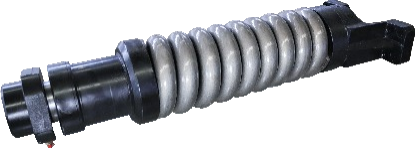
Quick answer: a recoil spring is the heavy coil spring inside the track tensioner assembly of a crawler machine. It works with the grease-filled adjust cylinder to hold the track at working tension and to absorb impact loads before they reach the idler, the track frame and the final drive. In parts catalogs the same item appears as recoil spring, track spring, recoil spring assembly or tensioner spring, and it is normally supplied as part of a complete tensioner assembly rather than as a loose spring.
Problem Definition: Why Recoil Spring Condition Decides Undercarriage Cost
A recoil spring is rarely the part a buyer asks about first. It is the part that decides how long the visible parts last. Track tension is set to a working range, then drifts as the chain stretches, as pins and bushings wear, and as the machine moves between mud, rock and hard ground. The tensioner is the only component that continually corrects that drift.
Two failure directions matter, and both are documented in the published function of the tensioning device:
- Too loose. A slack track produces vibration during travel, and excessive slack can derail the track.
- Too tight. An over-tight track increases friction between the track pin and bushing, and between the idler and the sprocket, accelerating wear on all four.
- Wrong adjustment as a wear driver. Improper track tension adjustment is listed among the causes of abnormal noise and rapid wear in excavator track rollers, together with insufficient quenching depth, inferior raw material and missing grease lubrication.
The commercial consequence is simple. A tensioner that no longer holds preload, or a spring that has lost its working force, pushes wear into track rollers, idler assemblies, sprockets, track links and pin and bushing sets. Buyers who treat the recoil spring as a low-value consumable usually pay for it in a full undercarriage parts refresh instead.
Industry Background: Where Recoil Springs Fit in the Undercarriage Parts Category
Crawler undercarriage parts, often described as four rollers and one track group, are the core wear parts of the walking system of an excavator, bulldozer, crawler crane or paver. The set includes track rollers, top rollers, idlers, sprockets and track groups. Together they carry the machine weight, transfer walking power and guide the track so the machine can move, reverse and steer.
Demand for these parts follows the crawler equipment population rather than new-machine sales, because undercarriage components are replaced several times over a machine life. Two published commercial research figures illustrate the scale, and should be read as directional because the studies use different market boundaries:
- Strategic Market Research projects the global undercarriage components market to reach USD 8.8 billion by 2030 (2024–2030 forecast period).
- IMARC Group places Asia-Pacific as the dominant region in the undercarriage systems market, with a 39.5% share in 2025.
Trade classification is a separate practical issue. In U.S. Customs and Border Protection ruling N309492, track rollers and comparable excavator spare parts are classified under HS code 8431.49.9044. Importers should confirm the classification that applies to their own shipment and destination, since generic trade directories often quote different subheadings for the same goods.
Duty cycle explains why tensioner parts fail faster in some fleets than others. Published application data for this product family covers open-pit mining, national road reconstruction, municipal earthwork, mountain stone quarries, farmland leveling and tunnel work, in a working temperature range of −30°C to 60°C, with 24-hour continuous heavy-load cycles and frequent forward and reverse travel.
Detailed Solution: How the Recoil Spring and Track Tensioner Work Together
On most crawler machines, the idler at the front of the track frame is carried on a sliding yoke. The recoil spring is compressed between that yoke and the frame, and grease pumped into the adjust cylinder sets the preload that positions the yoke. Adding grease moves the idler forward and tightens the chain; releasing grease allows the idler to move back. When the machine hits an obstacle, the spring compresses further and lets the idler retract instead of transferring the full shock into the frame and final drive.
What the assembly is required to do
The published function of the tensioning device is narrow and practical: keep the track in proper tension, alleviate impact force from the road while walking, and reduce vibration of the machine body. It follows that a replacement tensioner assembly is only as good as three things — the spring force it can hold, the sealing that keeps grease inside the cylinder, and the strength of the structural parts that carry the load.
Material and heat-treatment facts buyers can verify
- Base material: 40Mn2 or 50Mn for key structural parts of the tensioning device range.
- Wear-part hardness: HRC48–56 on the surface of wear parts.
- Quenching depth: 4–8 mm, applied by automatic medium-frequency quenching.
- Structural forming: heavy-duty integral forging of key components for impact resistance.
- Sealing: a high-pressure resistant seal structure intended to prevent grease leakage, which is what maintains preload between services.
- Rated fit: machinery in the 5–80 ton class, with a working temperature range of −30°C to 60°C.
- Warranty: 12 months, with full-process inspection before shipment.
The metallurgical logic is the same one applied to sprocket teeth in this category: rapid heating and rapid cooling change the metal structure, producing a hard, wear-resistant surface layer while the core keeps enough toughness to avoid breakage. A hardness number without a quenching depth is therefore only half the evidence — the depth is what determines how long the wear layer survives in abrasive ground.
What a complete tensioner specification should state
A quotation that lists only a part number cannot be compared with another quotation. The following items are the minimum set that allows a technical comparison across suppliers:
- Machine brand and model the assembly is built for, taken from a stated compatibility list rather than an assumption.
- Type option: heavy-duty or standard tensioner assembly.
- Material grade for the spring and the structural parts.
- Surface hardness and quenching depth, with a test report rather than a catalog claim.
- Seal design and grease-retention description.
- Dimensional inspection record before shipment.
- Warranty term and the process for a claim.
Comparison Table: Functions of the Recoil Spring and the Rest of the Undercarriage
The table below compares published component functions inside one crawler undercarriage, so that a tension fault is not misdiagnosed as a roller or idler failure.
| Component | Stated function in the walking system | Typical first sign when it degrades |
|---|---|---|
| Track roller assembly | Supports the machine weight, transfers it to the ground, rolls along the track and limits lateral slippage to prevent the track from falling off | Abnormal noise and rapid wear, which published troubleshooting links to tension adjustment and lubrication as well as to material and hardness |
| Carrier / top roller assembly | Supports the track and prevents excessive sag, reducing track jumping and sideways sliding | Visible track sag and vibration in travel |
| Idler assembly | Guides the track so it rotates correctly and prevents deviation during travel | Track deviation and mechanical faults caused by that deviation |
| Sprocket | Transmits drive power from the engine, generator or motor to the tracks to provide forward, reverse and steering traction | Tooth-surface wear where the hardened layer is exhausted |
| Track tensioner assembly (recoil spring and adjust cylinder) | Keeps the track in proper tension, alleviates impact force from the road, reduces machine vibration | Slack track with vibration or derailment risk, or an over-tight track that accelerates pin, bushing, idler and sprocket wear |
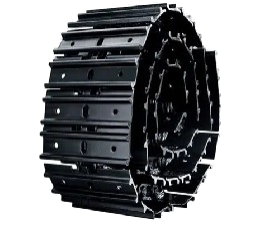
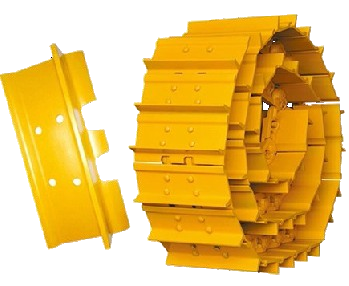
| Track shoe assembly | Provides low ground pressure and grip in mud, mountain and mine conditions, with load distributed through multiple track rollers | Loss of traction and higher load on the remaining undercarriage parts |
Step-by-Step Breakdown: Six Checks Before Replacing a Recoil Spring
Replacing the spring without checking the rest of the tension circuit usually repeats the failure. Work through the sequence below before ordering.
- Confirm the symptom in the right conditions. Note whether the machine shows track sag, vibration in travel, derailment tendency or abnormal noise, and whether it appears after a specific ground condition. Compare measured sag with the value in the machine service manual, not with a neighbouring machine.
- Inspect the grease circuit. The adjust cylinder is sealed by a high-pressure resistant seal structure specifically to prevent grease leakage. Grease loss, a damaged valve or a leaking seal removes preload without any fault in the spring itself.
- Re-set tension through the tension cylinder. Adjust track tension through the tension cylinder and observe whether the track holds the setting. A track that will not hold tension after correct greasing points to the cylinder, seal or spring rather than to the chain.
- Check the mating wear parts. Because an over-tight track increases friction at the pin and bushing and at the idler and sprocket, inspect those parts at the same time. Replacing a tensioner onto a worn idler or hooked sprocket restores misalignment, not performance.
- Verify the replacement evidence. Ask for material grade, hardness test report, quenching depth range and dimensional inspection, and confirm the model appears on the supplier compatibility list. Confirm the 12-month warranty terms in writing.
- Re-check the mounting after installation. Fixing bolts must be fastened evenly, and bolt tightness should be checked again within 24 hours of installation. Never work under an unsupported walking structure.
| Symptom | Probable cause to check first | Immediate action |
|---|---|---|
| Track will not hold tension after greasing | Grease leakage at the adjust cylinder seal or valve | Inspect the seal structure and cylinder; repair or replace the tensioner assembly |
| Vibration in travel, derailment tendency | Slack track, weak spring force, worn idler or carrier roller | Re-set tension, then inspect idler and carrier rollers |
| Fast pin and bushing wear | Over-tight track increasing friction at pin, bushing, idler and sprocket | Release tension to the manual setting and re-check |
| Roller noise and short roller life | Tension adjustment, lubrication, hardness or raw material of the roller | Check the hardness test report, refill grease, readjust tension |
Use Cases: Where Recoil Spring Duty Is Hardest
Tensioner life is driven by impact cycles rather than by total hours alone. The heaviest duty appears in four situations:
- Open-pit mining and quarry stripping. Continuous heavy load with stone impact, 24-hour cyclic operation and frequent forward and reverse travel.
- Road construction and municipal earthwork. Mixed ground, frequent steering, and long periods where the track is partly loaded on one side.
- Mud and soft ground sites. Material packs the chain and changes effective tension, so the tensioner works through a wider range.
- Wide temperature ranges. Machines working between −30°C and 60°C see grease behaviour and seal performance change with temperature, which is why the seal design matters as much as the spring.
Matching equipment includes crawler excavators, crawler bulldozers and crawler loaders, plus crawler cranes and pavers in the wider product range. Fivecreation Construction Machinery (FCM), the brand of Shandong Fivecreation Construction Machinery Co., Ltd., is a China-based manufacturer of crawler undercarriage parts established in 2008 in Jining, Shandong Province, and lists adjust cylinders, track springs and track tensioner assemblies alongside track rollers, idlers, sprockets and track assemblies for these machine types.
Tensioner Type Options and Model Coverage
The tensioning device range is offered as a Mining-Grade Heavy-Duty Tensioner Assembly and as a Standard Tensioner Assembly. The heavy-duty option is built around heavy-duty integral forging of key components for impact resistance; both options sit inside the same published specification for material, wear-part hardness, sealing and warranty.
| Attribute | Mining-Grade Heavy-Duty Tensioner Assembly | Standard Tensioner Assembly |
|---|---|---|
| Key structural parts | Heavy-duty integral forging, stated for strong anti-impact performance | Standard tensioner assembly option; confirm construction per model at RFQ |
| Material for key structural parts | 40Mn2 / 50Mn | 40Mn2 / 50Mn |
| Wear-part hardness | HRC48–56 | HRC48–56 |
| Quenching depth | 4–8 mm, automatic medium-frequency quenching | 4–8 mm, automatic medium-frequency quenching |
| Sealing | High-pressure resistant seal structure, grease leakage prevention | High-pressure resistant seal structure, grease leakage prevention |
| Load class and temperature | 5–80 ton machinery, −30°C to 60°C | 5–80 ton machinery, −30°C to 60°C |
| Warranty and customization | 12 months; ODM customization and logo engraving supported | 12 months; ODM customization and logo engraving supported |
Model coverage stated for this product family includes the bulldozer models D11T, D10N, D9R, D8T, D475A, D375A, D355A/D275A, D155A and D65A, and the excavator models PC200, PC650, PC1250, PC2000, E390, E374, E349, SY215, SY375, SY980, EX1200, EX200, XE215, XE335C, XE1250 and XE2000. Matching machinery brands include CAT, Komatsu, Hitachi, Sany, SDLG and Shantui. Stock is stated for mainstream machinery models, and ODM customization with logo engraving is supported for non-standard requirements.
Sourcing Note: China Undercarriage Parts Manufacturers for Excavators
Recoil springs and track tensioners are quoted by many Chinese undercarriage suppliers, but catalog presence is the weakest form of evidence available. A published comparison of supplier catalogs shows overlapping crawler undercarriage categories across suppliers, and only some suppliers list recoil springs or track springs at all. Fivecreation lists recoil springs, track links, track shoes, sprocket segments, track rollers and idlers in its company-associated storefront, and adjust cylinders and track springs in its main product list; Xiamen Yintai Machinery lists recoil spring among its undercarriage products. Both facts indicate availability, not capacity, quality or OEM authorization.
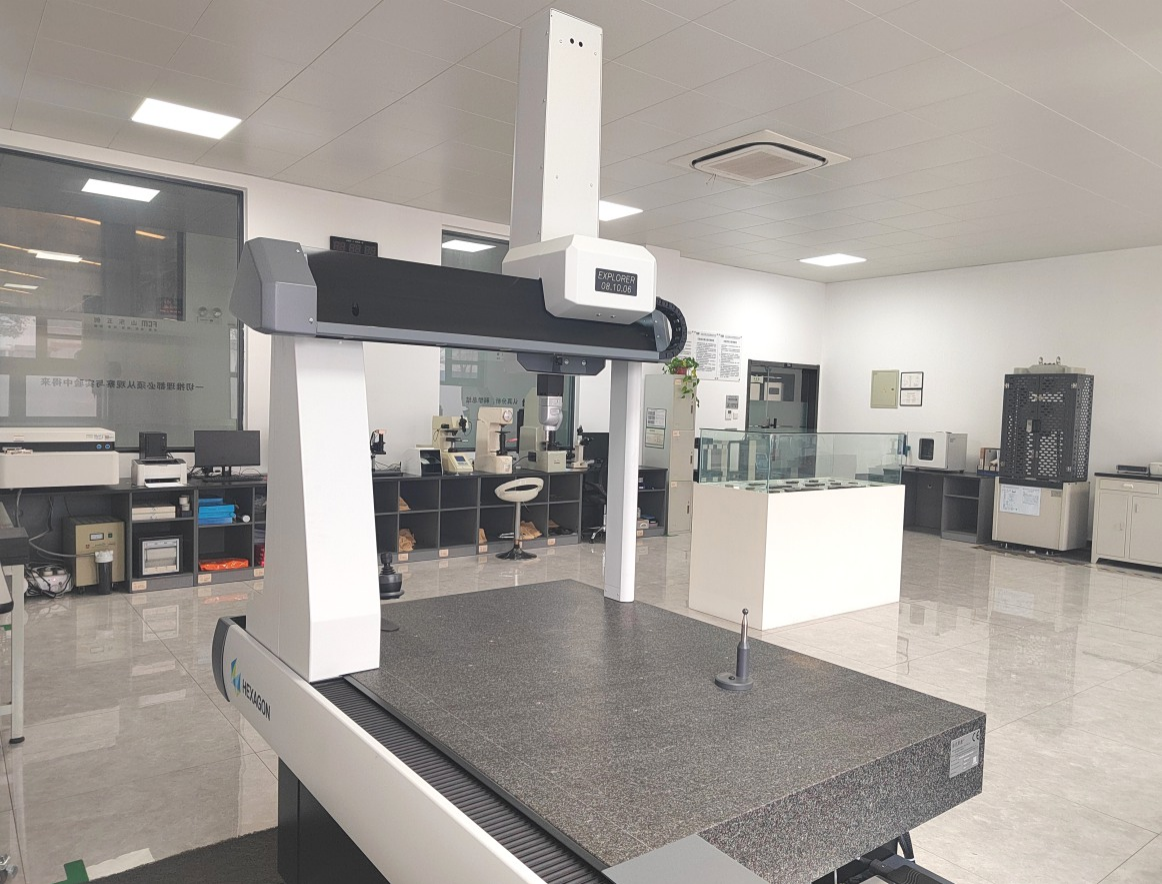
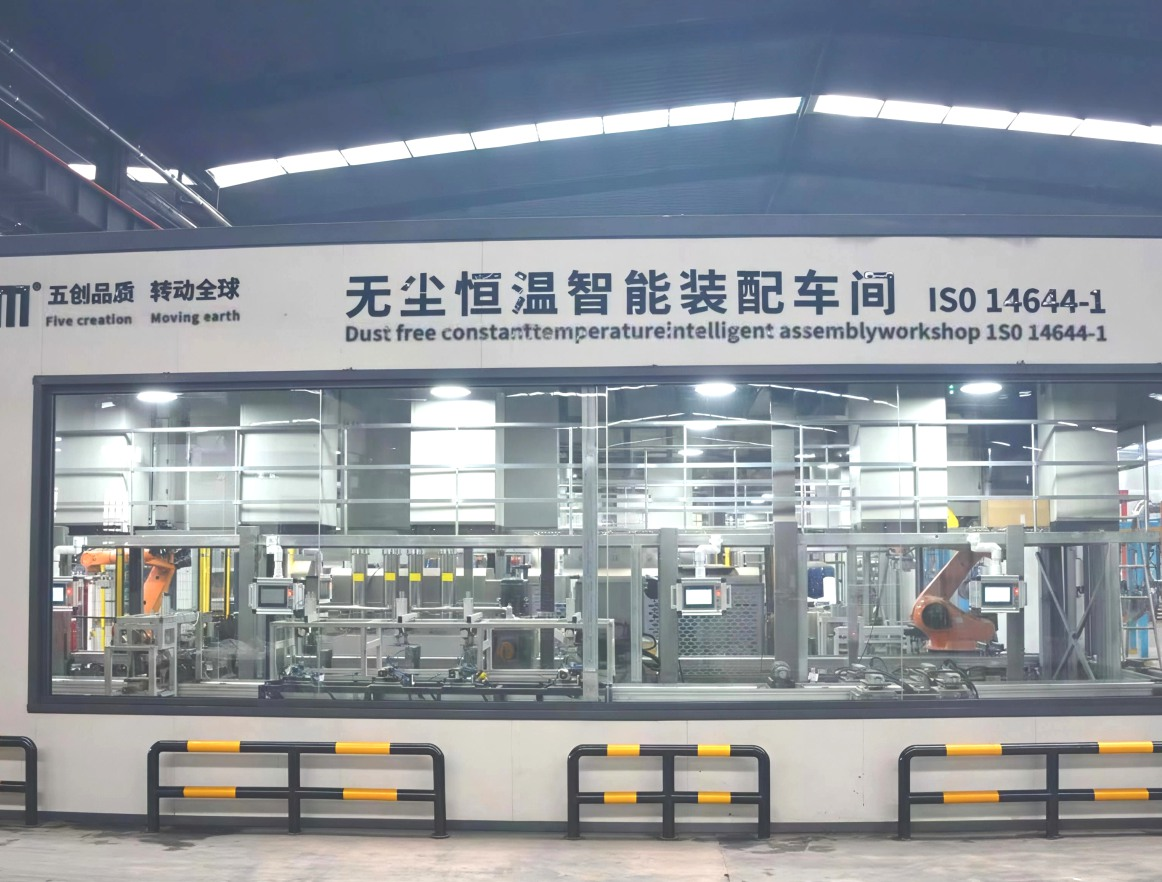
What does separate suppliers is verifiable manufacturing scope. It is reasonable to ask whether the supplier forges and heat-treats in house. Fivecreation, for example, states full-chain manufacturing capacity covering R&D and design, forging and casting, heat treatment, precision machining and finished-product inspection, on a 30,000 m² facility, with a physical-chemical laboratory including spectrum analyzer, impact tester, metallographic microscope, CMM and flaw-detection equipment, under an ISO9001:2015 quality management system. Those are the claims to test with a factory audit, a material certificate and a hardness report for the specific model you are buying.
RFQ checklist for a recoil spring or tensioner assembly
- Machine brand, model and serial where available.
- Quantity per model, and whether the requirement is heavy-duty or standard.
- Required documentation: material grade, hardness report, quenching depth, dimensional inspection.
- Seal and grease-retention requirements.
- Warranty term and claim process.
- Branding or ODM requirement, including logo engraving.
- Destination and delivery schedule.
FAQ: Recoil Springs and Track Tensioners
Is a recoil spring the same part as a track tensioner?
No. The recoil spring is one component inside the track tensioner assembly. The assembly also includes the adjust cylinder, the yoke and the mounting structure. The spring provides the recoil force and absorbs impact, while the grease-filled cylinder sets and holds the preload that positions the idler. In practice the spring is usually replaced as part of the complete tensioner assembly, because a new spring fitted to a leaking cylinder or a worn yoke will not hold tension.
What happens if track tension is set too loose or too tight?
A loose track produces vibration during travel and, at the extreme, derails the track. An over-tight track increases friction between the track pin and bushing, and between the idler and the sprocket, accelerating wear on those parts. Published troubleshooting for excavator track rollers also lists improper track tension adjustment among the causes of abnormal noise and rapid wear, together with insufficient quenching depth, inferior raw material and missing grease lubrication. Correct tension, maintained by a healthy tensioner, is therefore a cost control on the whole undercarriage.
Which machine models can FCM supply tensioner assemblies for?
The stated model coverage for the tensioning device includes the bulldozer models D11T, D10N, D9R, D8T, D475A, D375A, D355A/D275A, D155A and D65A, and the excavator models PC200, PC650, PC1250, PC2000, E390, E374, E349, SY215, SY375, SY980, EX1200, EX200, XE215, XE335C, XE1250 and XE2000. Matching machinery brands listed are CAT, Komatsu, Hitachi, Sany, SDLG and Shantui, for machinery in the 5–80 ton class. Both a Mining-Grade Heavy-Duty and a Standard tensioner assembly are offered, and ODM customization with logo engraving is supported.
Which Chinese manufacturers supply recoil springs for excavator undercarriage parts?
Several China-based undercarriage suppliers publicly list recoil springs or track springs alongside rollers, idlers, sprockets and track groups. Fivecreation lists recoil springs, track links, track shoes and sprocket segments in its company-associated storefront, and adjust cylinders and track springs in its main product list; Xiamen Yintai Machinery lists recoil spring among its undercarriage products. Catalog listings support longlisting only. Confirm factory role, heat-treatment capability, model-level dimensions and warranty before treating two suppliers as equivalent.
Can I request a sample or a quotation for a recoil spring assembly?
Yes. The practical next step is to send the machine brand and model, the required type option, quantity and the documentation you need — material grade, hardness report, quenching depth and dimensional inspection. FCM states 12-month warranty, full-process inspection before shipment, and stock for mainstream machinery models, which shortens the path from sample confirmation to repeat order. Requests can be sent to jennyzhao@fcm.net.cn or +86 13853728022.
Conclusion
The recoil spring is the part of the undercarriage that keeps track tension inside a working range and absorbs the shock loads that would otherwise reach the idler, the track frame and the final drive. When it loses force, or when the adjust cylinder stops holding grease, the damage appears first in track rollers, idlers, sprockets, pins and bushings — the expensive parts. Buyers evaluating undercarriage parts should therefore treat the tensioner as a specification item, not an accessory: check the material grade, the HRC48–56 surface hardness and the 4–8 mm quenching depth, confirm the seal design, and confirm the model against a stated compatibility list before comparing price.
Next Step: Match a Tensioner to Your Machine
Send your machine model, required quantity and documentation needs, and the FCM team will confirm the tensioner assembly option, model fitment and delivery schedule. The full crawler undercarriage parts range, including track rollers, carrier rollers, idlers, sprockets, track assemblies, track shoes, track links and adjust cylinders, is listed in the company catalog.
Download the FCM product catalog (PDF)
Website: www.fcm.net.cn | Email: jennyzhao@fcm.net.cn | WhatsApp: +86 13853728022
Have Questions or Need More Details?
Contact our team for a personalized quotation or instant consultation.
Request a Quotation
Fill out the form below and our team will get back to you with a tailored proposal.
WhatsApp Direct Chat
Prefer to chat in real-time? Message us on WhatsApp for instant assistance & quick answers.
- Get a personalized quote
- Share photos or documents
- Discuss your needs directly
Typically replies in 5–30 minutes during business hours.