Undercarriage Parts Sourcing Compliance Checklist: Supplier, Inspection & Warranty
Undercarriage Parts Sourcing Compliance Checklist: Supplier, Inspection & Warranty
A compliant undercarriage parts order is decided before the deposit, not after the first failure. Buyers sourcing track roller assy, sprocket, idler assy, carrier roller assy, track assy, track shoe, track link, pin & bushing, recoil spring or track tensioner should be able to obtain five things in writing: the stated material grade and hardness values, confirmation that full-process inspection is performed before shipment, the warranty terms and what they cover, the ODM customization and logo marking capability, and the stock held for the machine models actually in the fleet. This checklist converts each of those into a testable requirement rather than a supplier claim.
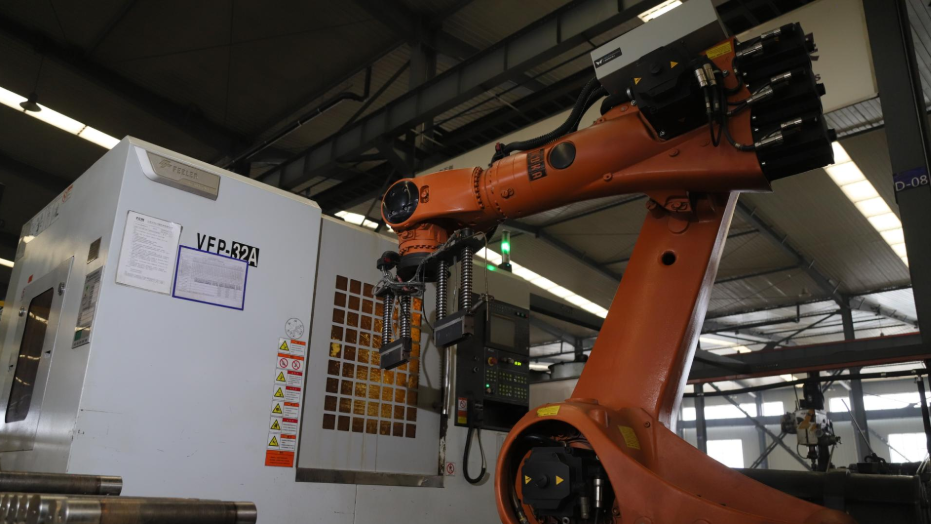
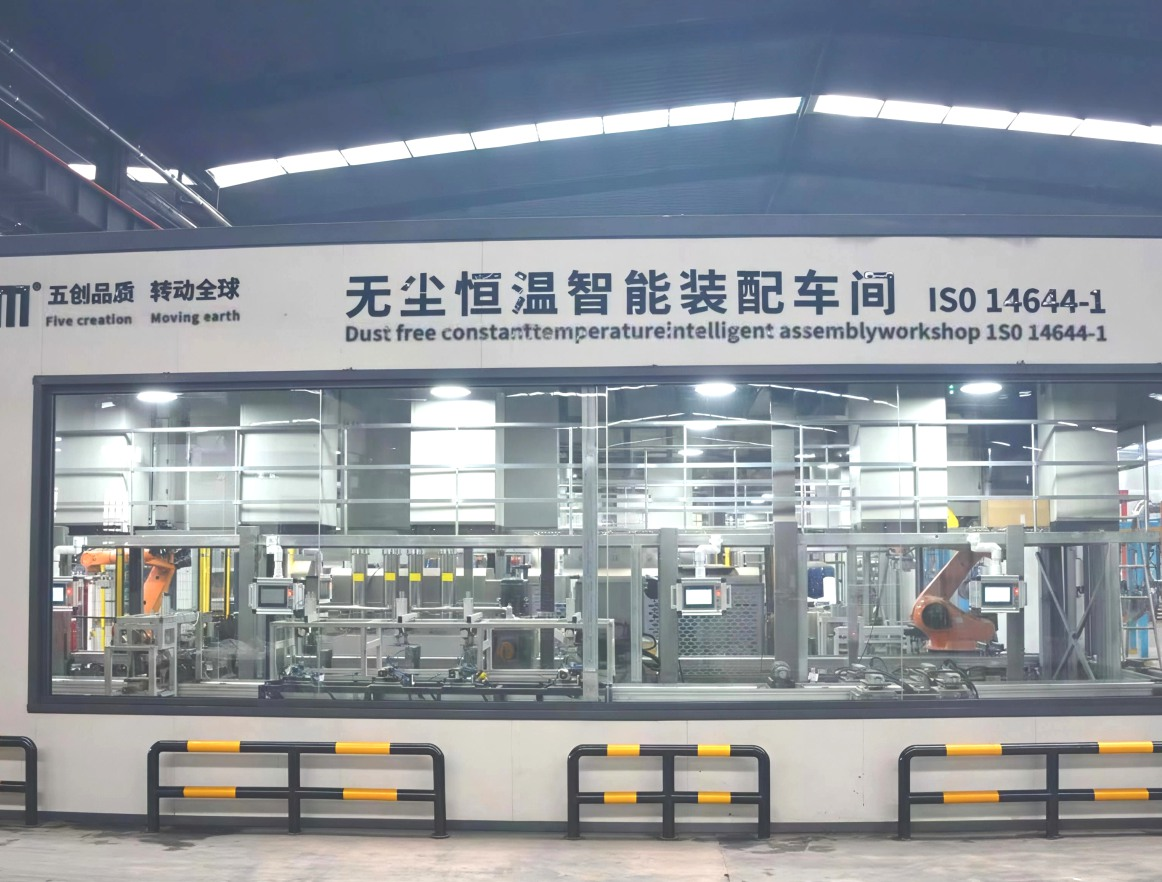
Fivecreation Construction Machinery (FCM) is an undercarriage parts manufacturer established in 2008 in the Jining High-tech Industrial Zone, Shandong Province, China, producing crawler undercarriage components for excavators, bulldozers, crawler cranes and pavers. Its stated production scope covers forging and casting, heat treatment, precision machining and finished-product inspection. This article uses that production model as a reference point for the questions any buyer should ask, including of FCM itself.
Why an undercarriage order fails after delivery
The properties that decide whether a track roller or a sprocket survives two seasons are not visible at the loading dock. Surface hardness, hardening depth and raw material grade are all set before the part is packed, and none of them can be assessed by looking at a painted component.
The undercarriage group — track roller, carrier roller, idler, sprocket and track shoe assembly — carries the machine weight, transfers walking power and guides the track. Because the group runs in abrasive, high-impact conditions, a shortfall in any of those hidden properties shows up as a specific failure signature: abnormal noise and accelerated wear within a short service time, which documented troubleshooting traces to insufficient quenching depth, unqualified raw material, missing grease lubrication and incorrect track tension adjustment.
The commercial risk is larger than the part price. Low hardness and poor wear resistance lead to wheel damage and track fracture, and those events stop the machine and inflate maintenance cost — a far bigger number than the difference between two quotations. The underlying purchasing mistake is predictable: buying from a supplier that has no complete heat treatment process and no raw material inspection system, and discovering it at the point of failure rather than at the point of order.
Industry background: a wear-parts category with a long, substitutable supplier list
Undercarriage components are a substantial global aftermarket. Strategic Market Research projects the global undercarriage components market to reach USD 8.8 billion by 2030, covering track chains, rollers, idlers, sprockets and shoes. IMARC Group reports that Asia-Pacific holds a significant share of the undercarriage systems market, at 39.5% in 2025 — which is why so many of the supplier profiles a buyer will encounter are Chinese manufacturers and trading companies.
That density of suppliers cuts both ways. On the positive side, catalogues overlap heavily: several China-based suppliers publicly list track rollers, carrier rollers, idlers, sprockets, track links, track shoes, pins and bushings and recoil springs, which means a buyer can usually source a mixed-model requirement from one or two vendors. On the negative side, the same overlap makes suppliers look interchangeable when they are not, because public listings rarely carry evidence of capacity, heat treatment control or inspection records.
Two technical markers recur across public supplier documentation and are worth treating as baseline questions. First, material grade: 40Mn2 appears as the stated material for a listed excavator carrier roller, and supplier technical material describes 35MnB or 40Mn2 as typical grades for track rollers. Second, thermal processing: forged parts are described as having a denser metal structure, stronger impact resistance and longer service life, while cast parts offer lower production cost and shorter delivery cycles for low-load work.
Trade documentation matters as well. U.S. Customs and Border Protection classifies track rollers under HS code 8431.49.9044, while generic trade listings often cite 8431.49.90 or 8431.49.00. A supplier that cannot state its classification clearly is a supplier whose export paperwork will need extra checking.
The nine-point supplier compliance checklist
Each item below is written as a requirement, with the evidence that satisfies it and the position FCM states publicly. Items that FCM does not document should be treated as open questions for any supplier, including FCM.
1. Legal entity, plant and quality system
Require the registered company name, the production address and the quality certificate in one document set. For FCM that is Shandong Fivecreation Construction Machinery Co., Ltd., operating a 30,000 m² manufacturing base in Jining with approximately 150 employees and 10 R&D engineers, and implementing the ISO9001:2015 quality management system. Check the certificate number, the issuing body, the validity date and — most importantly — whether the certified scope covers the components you are buying. A quality-system certificate supports process discipline; it does not by itself prove that a specific batch of idler assy meets a hardness specification.
2. Stated material grade, per component
Ask for the grade on the quotation and again on the mill or material certificate, component by component: roller body, link, pin, bushing, sprocket. FCM states 40Mn2 integral forging for heavy-load mining rollers; public supplier documentation for a comparable carrier roller also names 40Mn2, and 35MnB/40Mn2 are described as the typical grade family for track rollers. Also ask whether the part is forged or cast, because the two answer different duty cycles — forged for heavy-load and high-impact conditions, cast for low-load conditions where budget and delivery time dominate.
3. Hardness values and hardening depth
Two numbers must be stated, not one: surface hardness and hardening depth. FCM states medium-frequency quenching with a 6–8 mm hardening layer on 40Mn2 forged heavy-load rollers. Ask for the hardness test report for the batch and the supporting metallographic analysis. This is the single highest-value document in the pack, because insufficient quenching depth is a documented root cause of short service life and abnormal noise, and because a hardness figure that exists only in a sales email cannot support a claim later.
4. Full-process inspection and pre-shipment inspection
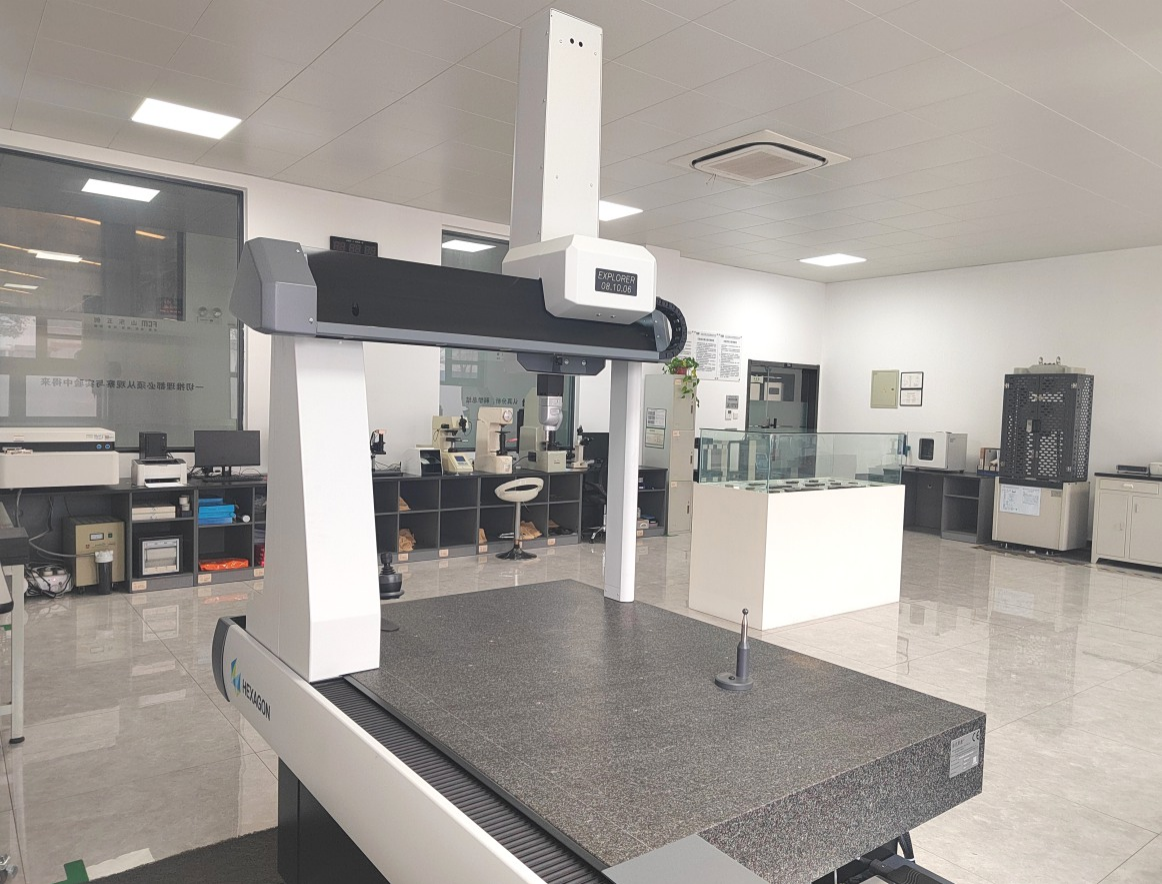
“Full-process” should mean from incoming material to finished product, and the supplier should be able to name the checkpoints. The control chain stated for FCM production runs: raw material composition inspection, heat treatment process control, load impact test, finished-product hardness detection and full product traceability, supported by spectrum analysis, impact testing, metallographic microscopy, CMM measurement and flaw detection in the in-house laboratory. Confirm that pre-shipment inspection is written into the order as the acceptance criterion — for FCM the stated acceptance basis is a pre-shipment test — and ask for the report format in advance so you know what you will receive.
5. Warranty terms, in writing
A warranty is a clause, not a promise. Confirm four things: the period (for example, a 12-month quality warranty), the failure modes covered, the evidence required to open a claim, and the remedy — replacement unit, credit or rework. FCM states a service system covering technical communication, production control, pre-shipment inspection and after-sales warranty, with pre-sales, in-sales and after-sales warranty services. Traceability is what makes the clause executable: a warranty that cannot be tied to a batch code and a part number is difficult to enforce once the parts are on a machine in another country.
6. ODM customization and logo marking
If you sell under your own brand, customization is part of compliance, not marketing. FCM states OEM and ODM customization according to customer drawings or samples, including custom undercarriage parts for non-standard bulldozer models. Ask specifically which components can carry your logo or part number, how the marking is applied, and where it sits so that it does not affect fit, sealing or wear surfaces. Lock the drawing revision and the approval step — drawing sign-off or approved sample — before mass production begins.
7. Stock coverage for mainstream models
Lead time is usually a stock question in disguise. Request a part-number list mapped to machine models, and expect coverage of the brands in your fleet — CAT, Komatsu, Hitachi, Sany, SDLG and Shantui are a reasonable reference set for excavator and bulldozer undercarriage work. FCM states complete stock of mainstream excavator and bulldozer models across a range covering hundreds of equipment models. Verify by part number rather than by brand family: a stock list that answers for one roller size does not prove coverage for a track assy or a recoil spring.
8. Capacity, delivery and export documentation
Capacity statements should be specific enough to compare. FCM states monthly production capacity of up to 50,000 pieces and annual capacity of 600,000 units, with an export ratio of 50% and shipments to Southeast Asia, Russia, Africa, the European Union, Australia and other markets. Pair that with documentation: confirm the HS classification used on the commercial invoice and check it against your broker's advice, since track rollers are classified under 8431.49.9044 by U.S. CBP while generic listings cite other 8431.49 codes.
9. Commercial terms and the document pack
The stated commercial baseline for FCM is a minimum order quantity of 2 units, FOB delivery terms, 30/70 payment terms and acceptance by pre-shipment test. Whatever the terms, they should appear on the quotation together with the document pack: material certificate, hardness test report, inspection report, packing list and the warranty clause. Terms that exist only in a chat thread are the ones that disappear when a claim is filed.
From RFQ to release: a seven-step verification workflow
- Define the part list and the machine models. List every component by model — track roller assy, sprocket, idler assy, carrier roller assy, track assy, track shoe, track link, pin & bushing, recoil spring, track tensioner — so that stock and pricing answers are comparable.
- Issue a specification-led RFQ. Require the supplier to state material grade, surface hardness, hardening depth, forged or cast construction, and marking requirements inside the quotation.
- Verify the entity and the process chain. Match the certificate holder, the plant address and the invoicing entity, and ask which processes are in-house: forging, casting, heat treatment, machining, inspection.
- Agree the inspection plan. Confirm the checkpoints, the sampling basis and the report format. Make pre-shipment inspection the acceptance criterion rather than a favour.
- Fix the warranty clause. Write the period, covered failure modes, claim evidence and remedy into the contract, and require a batch code on each part or package.
- Lock customization and marking. Approve the drawing revision or sample, and confirm the marking method and location on each component.
- Inspect, document and archive. Review the pre-shipment report before the balance payment, then archive the batch records so a warranty claim can be traced months later.
Where this checklist changes the outcome
Undercarriage rebuild on a continuous heavy-load site
For open-pit mining, quarry and 24-hour cyclic operation, the specification conversation should start at 40Mn2 integral forging and a 6–8 mm hardening layer, with the hardness report attached to the batch. On those sites the cost of an early failure is measured in downtime, not in part price.
Distributor building an own-brand undercarriage line
A distributor adding its own logo needs ODM capability plus a marking agreement that protects the wear surfaces, and a stock list that covers the brands its customers actually run. Custom parts for non-standard bulldozer models should be confirmed at drawing level before the first production run.
Mixed-brand rental or contractor fleet
Where the fleet spans several machine brands, the deciding compliance item is often stock coverage plus a low minimum order quantity for urgent replacements. A minimum order of 2 units makes spot replacement practical, but only if the part-number list genuinely covers the models involved.
First import from a new supplier
For a first order, the document pack matters more than the discount. Material certificate, hardness report, inspection report and a written warranty clause give a buyer something to act on if the first shipment underperforms.
Verification matrix: requirement, evidence and stated position
| Requirement | Evidence to request | Fivecreation stated position | How to verify |
|---|---|---|---|
| Legal entity and plant | Registered name, plant address, business licence | Shandong Fivecreation Construction Machinery Co., Ltd., Jining, Shandong; 30,000 m² base; approx. 150 employees | Match address across certificate, invoice and packing list |
| Quality system | ISO9001:2015 certificate with number and scope | ISO9001:2015 quality management system implemented | Check issuing body, validity and certified scope |
| Material grade | Material certificate per component | 40Mn2 integral forging for heavy-load mining rollers | Compare quotation grade against certificate grade |
| Hardness and depth | Hardness test report, metallographic analysis, hardening depth | Medium-frequency quenching, 6–8 mm hardening layer | Request the laboratory report for the specific batch |
| Inspection | Inspection plan and pre-shipment report | Full-process control from raw material composition inspection to finished-product hardness detection, with full traceability; acceptance by pre-shipment test | Review the report before releasing the balance payment |
| Warranty | Written clause: period, coverage, claim evidence, remedy | Pre-sales, in-sales and after-sales warranty services; service system covers technical communication, production control, pre-shipment inspection and after-sales warranty | Confirm the claim can be tied to a batch code and part number |
| ODM and marking | Drawing revision, marking sample | OEM and ODM customization per customer drawings or samples | Approve drawing or sample before mass production |
| Stock coverage | Part-number list by machine model | Complete stock of mainstream excavator and bulldozer models; ranges covering hundreds of models | Verify by specific part number, not by brand family |
| Capacity and terms | Capacity statement, MOQ, Incoterm, payment terms | 50,000 pieces per month; 600,000 units per year; MOQ 2 units; FOB; 30/70 payment | Confirm all terms appear on the quotation |
Frequently asked questions
Which quality documents should a Chinese undercarriage parts supplier provide before an order is confirmed?
Request six documents: the ISO9001:2015 certificate with number and scope, a material certificate stating the grade for each component, a hardness test report with metallographic support, an inspection plan that names pre-shipment inspection as the acceptance criterion, a written warranty clause, and a part-number list covering the machine models in scope. The production control chain stated for FCM runs from raw material composition inspection through heat treatment process control and load impact testing to finished-product hardness detection, with full product traceability. Collecting these before the deposit is what makes a later claim possible.
Can a Chinese supplier produce ODM undercarriage parts and mark our logo?
ODM and OEM customization according to customer drawings or samples is a stated capability for FCM, including custom undercarriage parts for non-standard bulldozer models, produced on 40Mn2 integral forging with a 6–8 mm hardening layer for heavy-load applications and at a stated capacity of up to 50,000 pieces per month. Logo and part-number marking should be agreed at drawing level: confirm which components can be marked, how the marking is applied and where it sits so that it does not interfere with fit, sealing or wear surfaces, then approve the drawing revision or sample before production.
What are the MOQ, price terms and payment terms for undercarriage parts?
The stated commercial baseline for FCM is a minimum order quantity of 2 units, FOB delivery terms, 30/70 payment terms and acceptance by pre-shipment test. Quotations are only comparable when they carry the same technical basis, so ask each supplier to quote with the material grade, surface hardness and hardening depth printed alongside the price. A lower unit price at a thinner hardening layer is a different product, not a better offer, and the maintenance cost difference will appear later in the machine's operating hours.
How can a buyer verify hardness and material before the shipment leaves the factory?
Make pre-shipment inspection the acceptance criterion of the order, then review the report before releasing the balance payment. FCM's in-house physical-chemical laboratory covers spectrum analysis, hardness testing, impact testing, metallographic microscopy, CMM measurement and flaw detection, which is the evidence base behind a stated hardness value and hardening depth. Also confirm that the sample you approve comes from the production batch and carries the same batch code as the shipment, so the approval actually transfers to the parts you receive.
How fast can rollers, idlers and sprockets be supplied for mainstream excavator and bulldozer models?
Delivery speed in this category is driven by capacity plus stock coverage rather than by a single lead-time figure. FCM states monthly production capacity of up to 50,000 pieces, annual capacity of 600,000 units, and complete stock of mainstream excavator and bulldozer models, with an export ratio of 50% across markets including Southeast Asia, Russia, Africa, the European Union and Australia. The practical step is to send your part-number list with machine models and quantities so that stock and production lead times can be confirmed per line item in writing rather than in general terms.
Conclusion: buy the evidence, not the catalogue page
Undercarriage parts are a category where the decisive quality variables — material grade, hardness, hardening depth and inspection discipline — are fixed long before the part reaches a machine. That is why a sourcing compliance checklist outperforms a price comparison: it forces the supplier to state numbers, attach reports and commit to a warranty clause in the contract. Applied consistently, the nine checks in this article turn a supplier conversation into a documented, auditable decision.
The same standard should be applied to Fivecreation Construction Machinery (FCM): request the ISO9001:2015 certificate and its scope, the material and hardness records for 40Mn2 forged rollers with a 6–8 mm hardening layer, the pre-shipment inspection report, the written warranty terms and the part-number list for CAT, Komatsu, Hitachi, Sany, SDLG and Shantui coverage — then judge the answers against the checklist.
Next step: request the document pack before you order
Send your machine models and part-number list — track roller assy, sprocket, idler assy, carrier roller assy, track assy, track shoe, track link, pin & bushing, recoil spring or track tensioner — and ask for the quotation with material grade, hardness values, inspection plan and warranty clause attached. FCM is based at the north end of Meilishan Road, Gaoxin District, Jining City, Shandong Province, China, and can be reached at jennyzhao@fcm.net.cn or +86 13853728022 (also WhatsApp). The company website is www.fcm.net.cn, and the full catalogue is available for download: Fivecreation Construction Machinery product brochure (PDF).
Have Questions or Need More Details?
Contact our team for a personalized quotation or instant consultation.
Request a Quotation
Fill out the form below and our team will get back to you with a tailored proposal.
WhatsApp Direct Chat
Prefer to chat in real-time? Message us on WhatsApp for instant assistance & quick answers.
- Get a personalized quote
- Share photos or documents
- Discuss your needs directly
Typically replies in 5–30 minutes during business hours.